FlowCycle™ · by MasterMined Innovation · Patent pending
Starting less finishes more.
FlowCycle is an operating method for the underground cycle, and a calibrated simulator that measures what any change is worth on your mine before you commit to it. The first gains come from the same fleet and crews. They are the foundation for the real uplift.
The problem
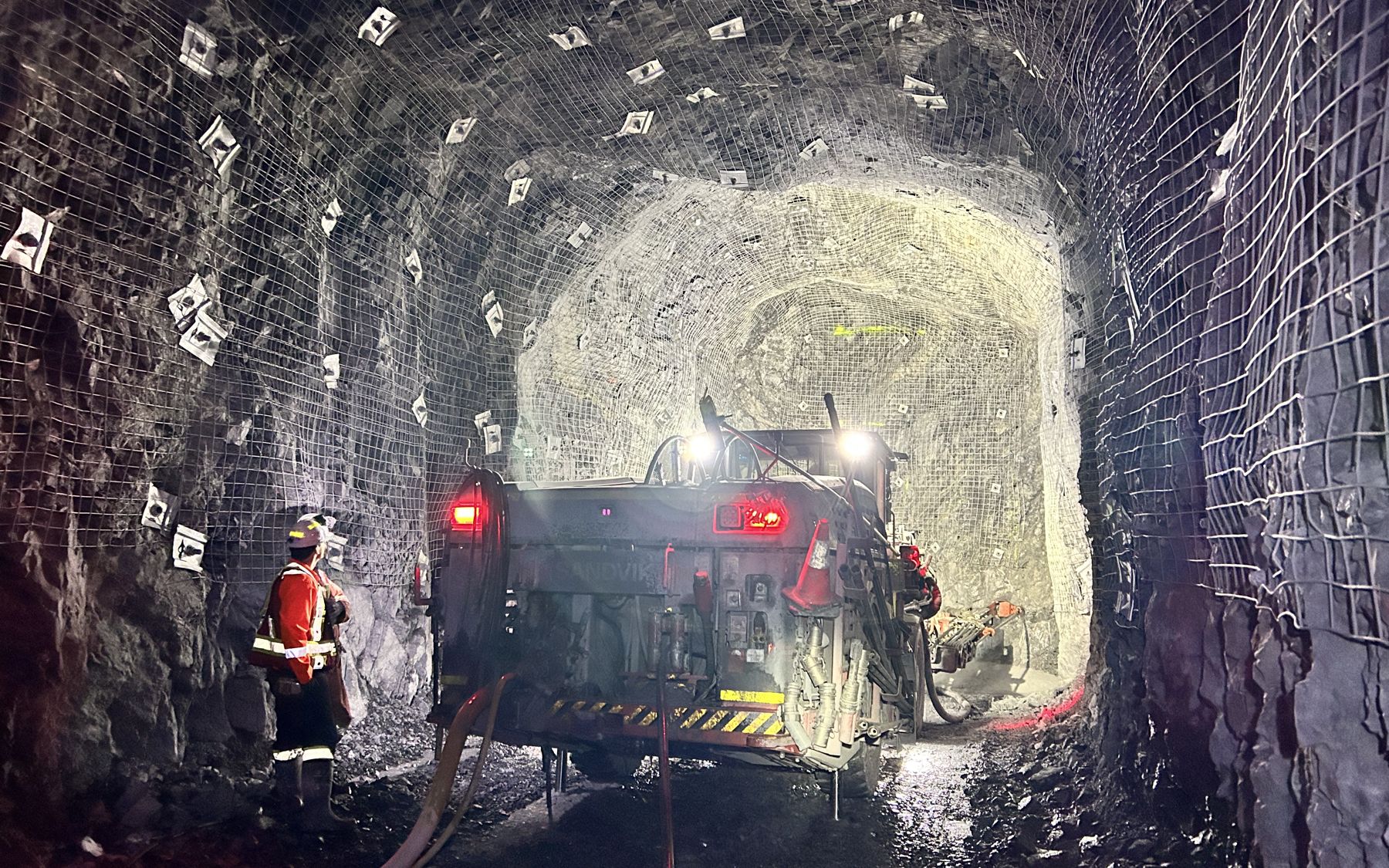
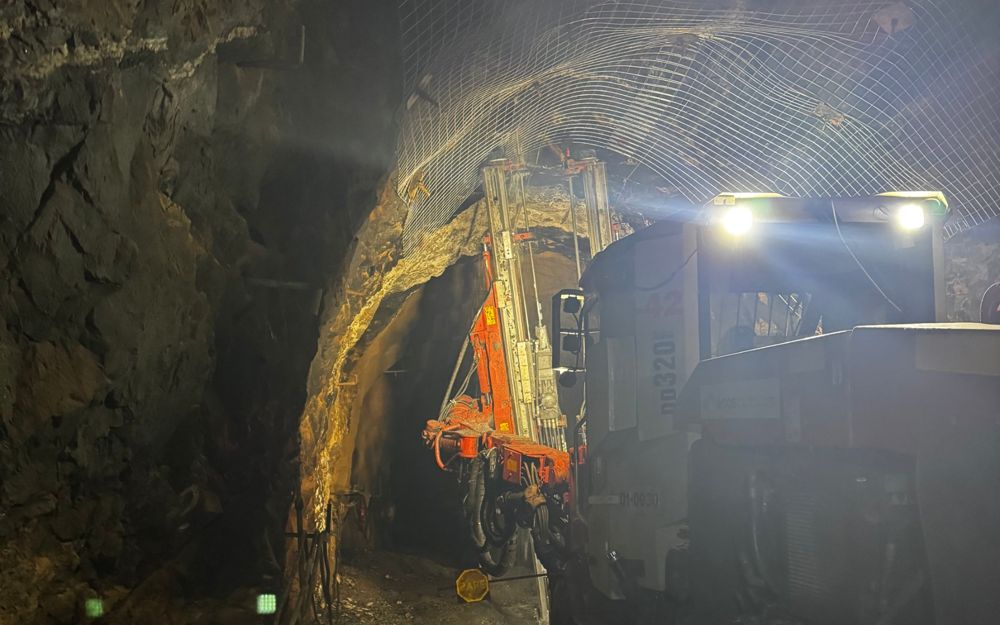
Underground mines are falling behind.
The same challenges show up on almost every underground mine. They are symptoms of one problem: throughput.
Productivity falling
Fewer metres and tonnes per machine and per person, year after year.
Costs climbing
Typically A$8,000 to A$10,000 per development metre, and rising.
Behind plan
Development and ore access lag the schedule, and the plan is reset to match.
More fleet, same output
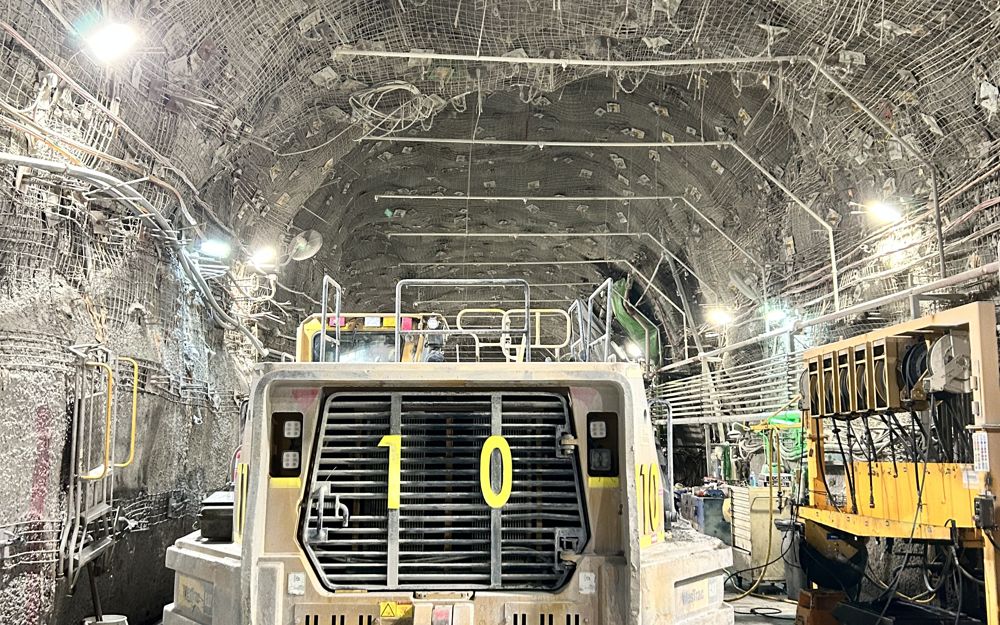
Extra equipment and labour add congestion, not metres.
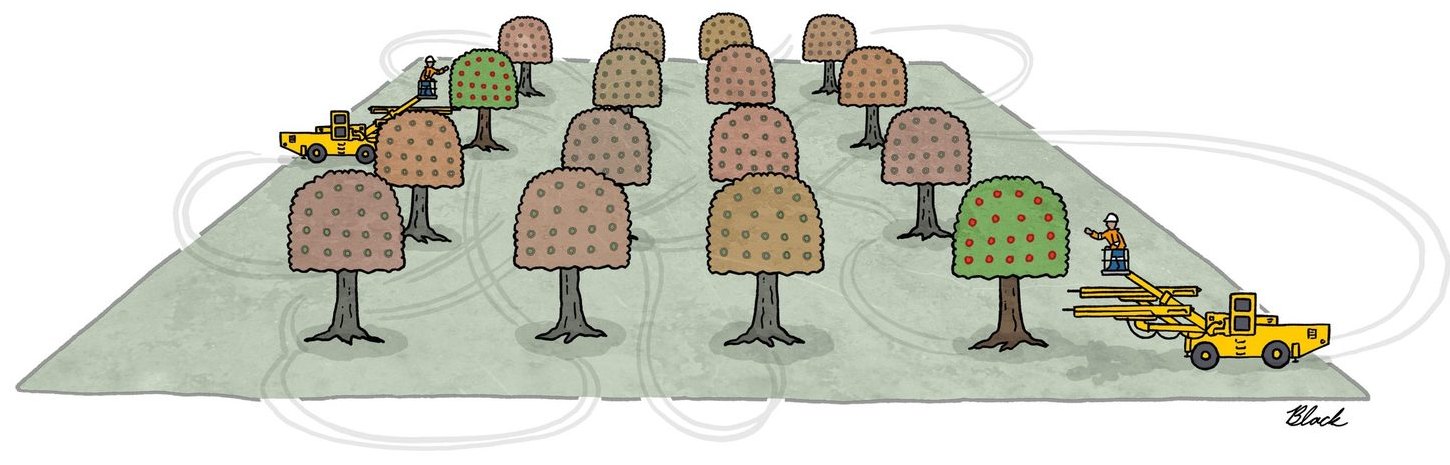
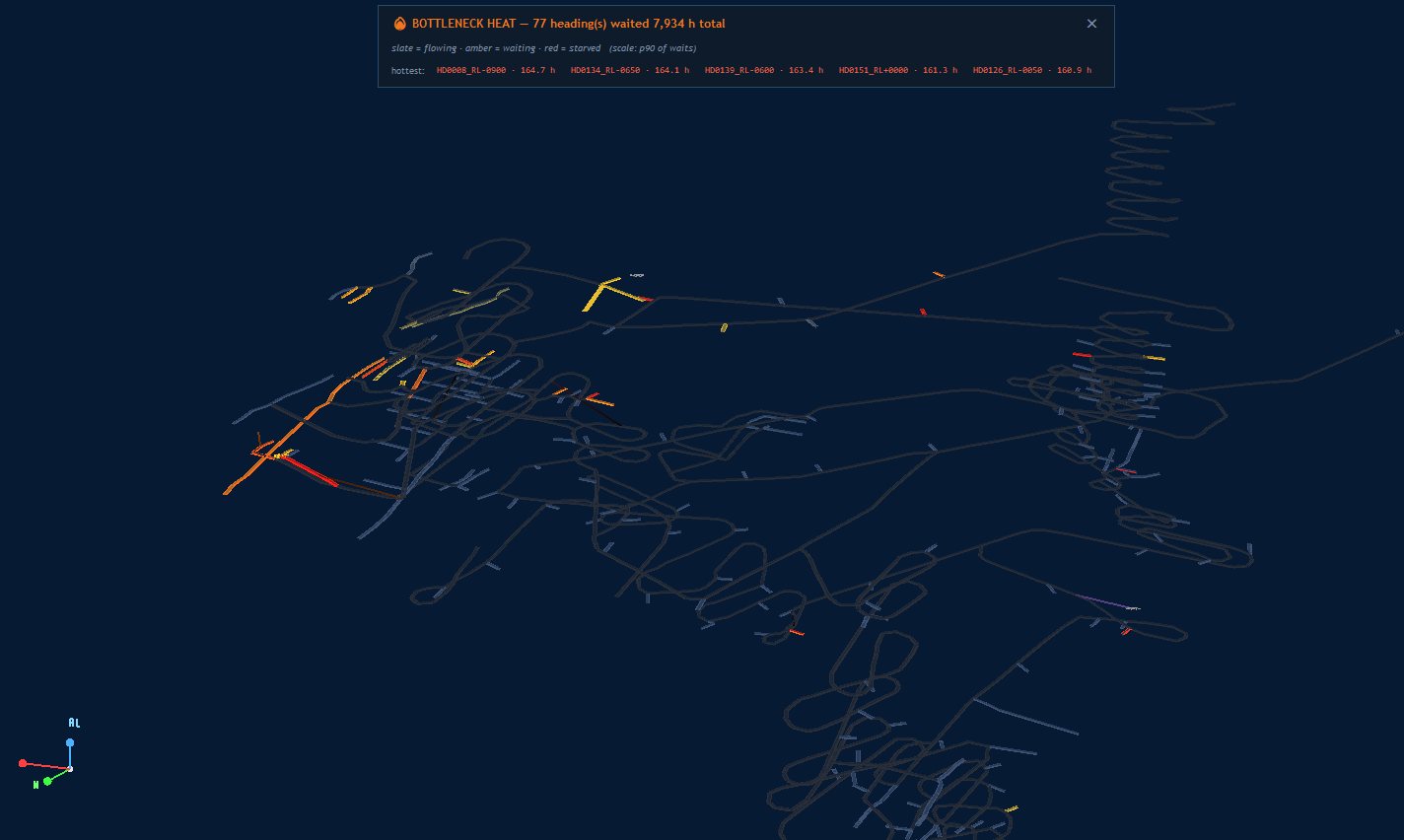
Priority farming, not mining. Jumbos are sent to whichever high-priority heading is ready. Every move adds tramming, waiting and set-up.
of the time, a development heading has no activity on it at all.
The mine keeps every heading open to keep every machine busy. The mine is busy. The headings are not. It pays in inventory, congestion, services and slow access to ore.
Mine performance uplift
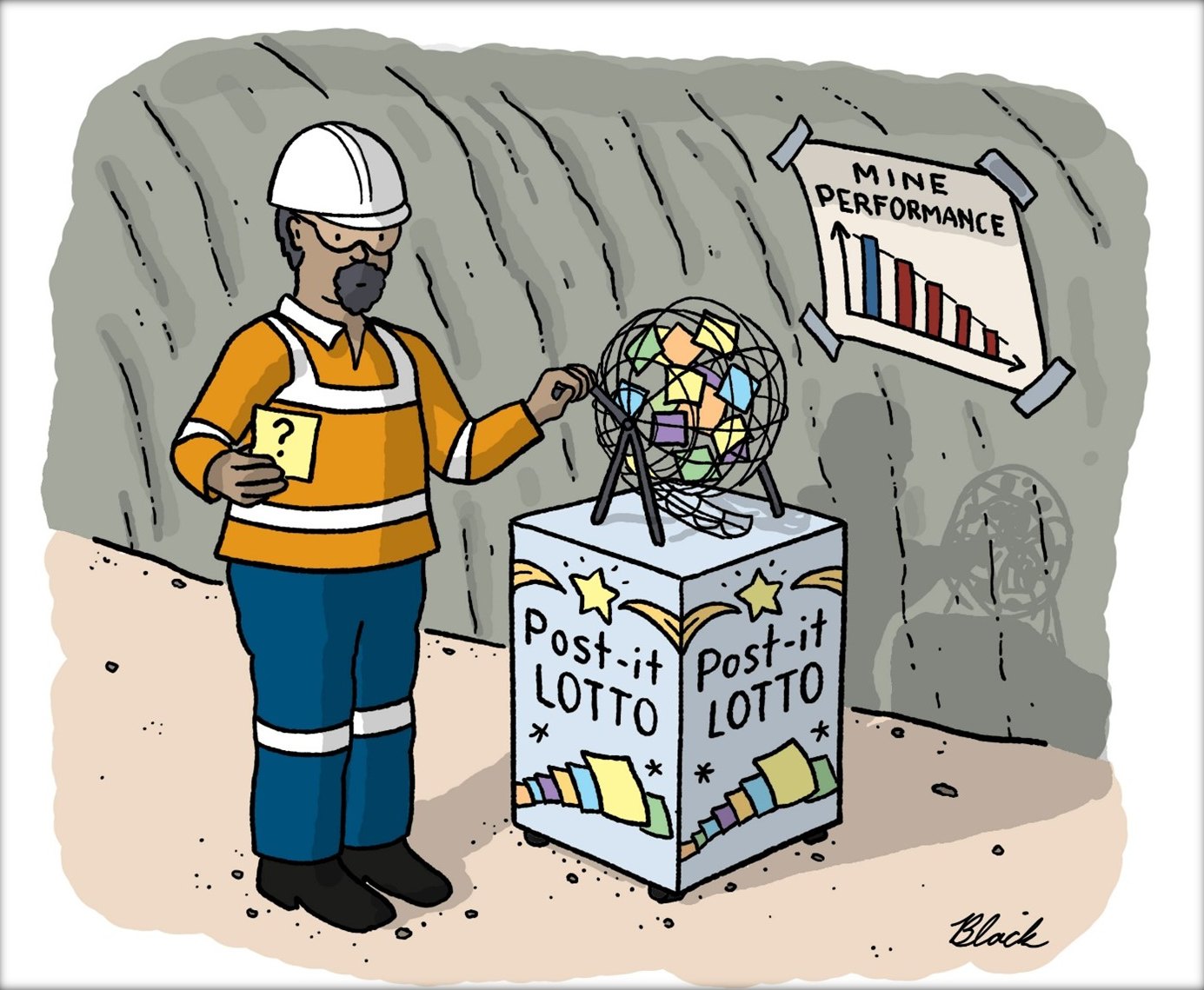
Time to stop playing Post-it Lotto.
Most improvement programmes start with a workshop and a wall of sticky notes. Ideas are picked by vote, trialled on an unstable operation, and the result cannot be separated from luck.
FlowCycle replaces the lottery with a system. Stabilise the cycle first. Then test each idea in the calibrated model, ranked by value, before money is spent.
Mine performance uplift. Systemised.
The core idea
Utilisation is not throughput.
Pushing every heading flat out produces congestion, queues and rework, not metres. Throughput comes from keeping work moving through the cycle. The fleet, the crews and the plan do not change. Only the operating logic does.
Measured
Same mine. Same fleet. Same plan.
Two cases, both simulated over full years with three runs each. On metres, cost and plan delivery, the worst FlowCycle run beat the best conventional run.
Development metres in twelve months on the demonstration mine. 12,592 m became 15,108 m.
Development metres in plan year one on a client’s real plan, with the same three jumbos.
Stope ore pulled forward a year on the client plan.
Cost per development metre on the client plan. −12.5% on the demonstration mine.
Example results from FlowCycle simulation.
The real uplift
These results are only the start.
The gains above come from operating logic alone. Same fleet, same crews, nothing bought. Their real value is what they make possible: a stable mine, where every new technology and practice can be measured, proven and stacked. That is where the step change sits.
Today
A calibrated model of how the mine actually develops and produces, built from its own data. The site signs it off before anything is compared to it.
Stabilised
The same mine, fleet and crews, run on FlowCycle operating logic. Nothing is bought or replaced.
+20% development metres, measured
Uplifted
New equipment, ground support, work practices and automation, each priced in dollars per metre against a stable base, then rolled out in order of value.
Target: +30% performance, −30% cost
The instrument
A calibrated digital twin of the underground mine.
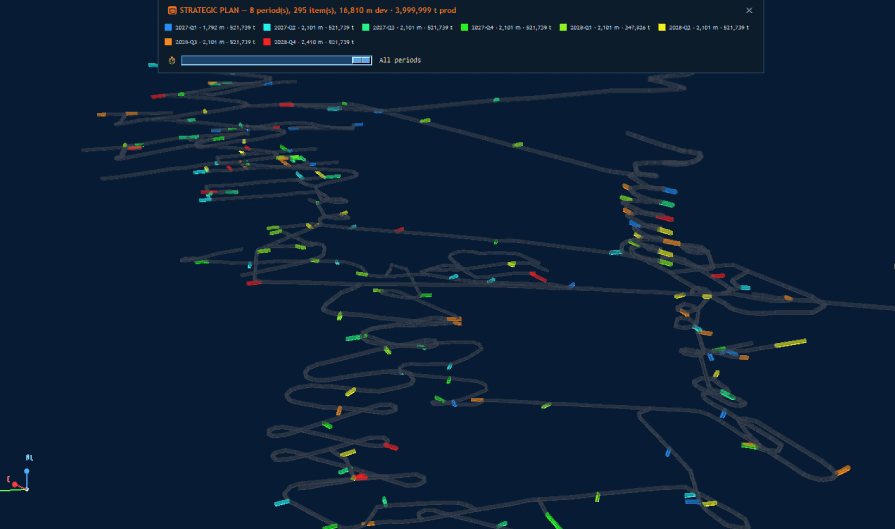
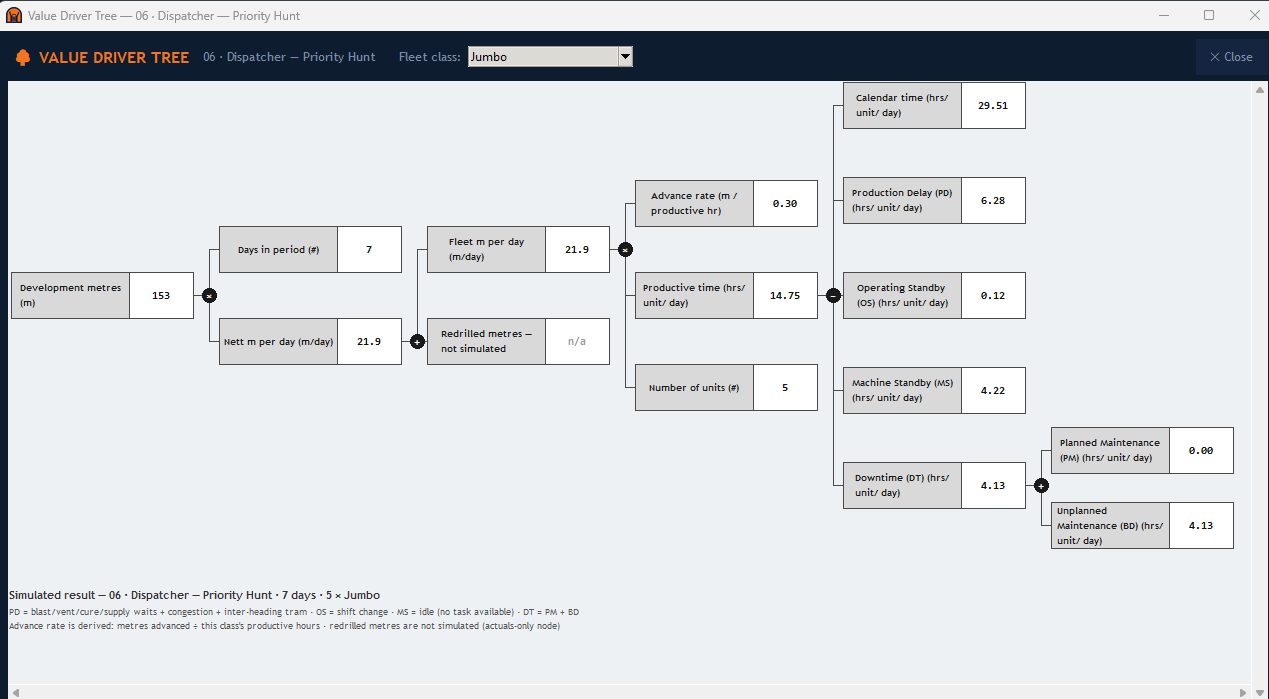
Every heading, stope, machine and crew, simulated from first principles over 30 to 730 days, in minutes of run time.
Better together
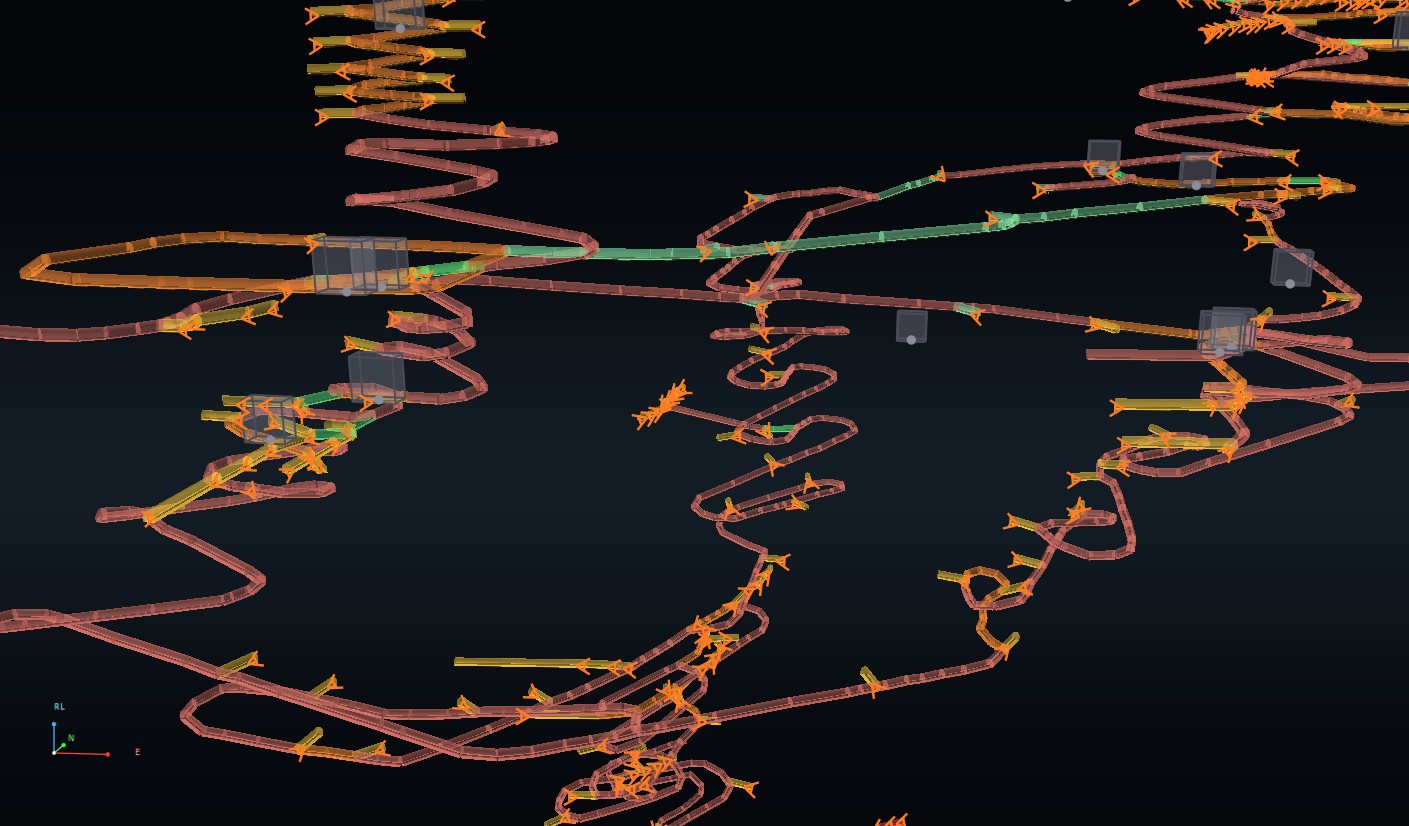
FlowCycle tests the cycle. GreenLeap tests the material flow.
FlowCycle shows whether the development and stoping work can be done. GreenLeap shows whether the material can be moved, from the face to the plant: passes, crushers, conveyors, shafts and haulage, with the fleet, energy and cost behind them. Together they test the whole mine.
Contact
Find the lost metres.
Talk to us about a one-week site diagnostic. We will show you where the cycle loses time and what it is worth to fix.